



Que signifie votre code Code Défaut BMW ?
Grace au système OBD, les
Bmw
fabriqués après 1996 sont normalement équipés d'une prise diagnostique OBD.
Si l'ordinateur de la voiture rencontre un problème,un code d'erreur ou un code de diagnostic (DTC)
sera stocké dans la mémoire de l'ECU de la voiture.
Avec un lecteur OBD branché sur le port OBD (On-Board Diagnostics) de la voiture, vous pouvez lire la liste des codes stockés, et donc découvrir quel est le problème.
Les codes suivent une formule permettant de savoir généralement quel est le problème avant même de regarder le tableau ci-dessous.
Nous vous présentons ci-dessus une liste très complète des différents codes défauts possibles.
Si le code défaut de votre auto s'affiche au tableau de bord, vous n'aurez peut-être même pas besoin d'un lecteur OBD . il sera dans la liste .
Réparer le code défaut de votre auto, c'est potentiellement simple à faire avec vos revues et méthodes techniques.

Réparer le code défaut de votre auto, c’est potentiellement simple à faire avec nos revues et méthodes techniques
| Code | Libellé |
|---|---|
| 25EC00 | Exhaust-gas diff.-pressure sensor, particulate filter, plausibility: hose before particulate filter to exhaust-gas diff.-pressure sensor clogged |
| 25ED00 | Accelerator pedal module, plausibility: Plausibility between sensors 1 and 2 violated |
| 25EF00 | Intake air temperature sensor, signal: Temperature too high (duty cycle too high) |
| 25F000 | Intake air temperature sensor, signal: Temperature too low (duty cycle too low) |
| 25F100 | Intake air temperature sensor (reference signal for hot film air mass meter): Frequency too low |
| 25F200 | Intake air temperature sensor (reference signal for hot film air mass meter): Frequency too high |
| 25F300 | Intake-air temperature sensor, signal: Open circuit or short circuit to positive/ground or temperature too high |
| 25F400 | Intake-air temperature sensor, signal: temperature too low |
| 25F500 | Intake-air temperature sensor, signal: Open circuit or short circuit to positive |
| 25F600 | Intake air temperature sensor, signal: Short circuit to ground |
| 25F700 | Charge-air temperature sensor, range: upper physical limit exceeded |
| 25F800 | Charge-air temperature sensor, range: lower physical limit undershot |
| 25F900 | Charge-air temperature sensor, signal: Open circuit or short circuit to positive |
| 25FA00 | Charge-air temperature sensor, signal: Short circuit to ground |
| 25FF00 | Exhaust-gas temperature sensor after exhaust gas recirculation cooler, range: Upper physical limit exceeded |
| 260A00 | Exhaust-gas temp. sensor before catalytic converter, range: lower physical limit undershot |
| 260B00 | Exhaust-gas temp. sensor before particulate filter, range: upper physical limit exceeded |
| 260C00 | Exhaust-gas temp. sensor before particulate filter, range: lower physical limit undershot |
| 260F00 | Electromotive throttle actuator, position sensor, signal: Short circuit to B+ |
| 261A00 | Reduction agent (AdBlue) active reservoir heater, control: Circuit to ground |
| 261B00 | Reduction agent (AdBlue) active reservoir, heater diagnosis, signal: Circuit high |
| 261C00 | Reduction agent (AdBlue) active reservoir, heater diagnosis, signal: Circuit open or circuit to ground |
| 261D00 | Reduction agent (AdBlue) passive reservoir level sensor, range: Top fysical limit exceeded |
| 261F00 | Reduction agent (AdBlue) pressure sensor, range: Top fysical limit exceeded |
| 262B00 | Reduction agent (AdBlue) active reservoir level sensor, range: Top fysical limit exceeded |
| 262C00 | Reduction agent (AdBlue) active reservoir level sensor, range: Below the lower fysical limit |
| 262D00 | Reduction agent (AdBlue) active reservoir, temperature sensor, signal: Circuit open or circuit high |
| 262F00 | DFC_UTnkTSig: Signal error for CAN message |
| 263A00 | Swirl-flap actuator, activation: temperature-dependent maximum current exceeded |
| 263B00 | Swirl-flap actuator, activation: Supply voltage too low |
| 263C00 | Swirl-flap actuator, activation: Open circuit |
| 263D00 | Swirl flap actuator, control: Output stage overheating |
| 263F00 | swirl-flap actuator, activation: Short circuit to ground |
| 264A00 | Injector cylinder 3, Measurement of energy consumption: Energy consumption too high |
| 264B00 | Injector cylinder 6, Measurement of energy consumption: Energy consumption too high |
| 264C00 | Injector cylinder 2, Measurement of energy consumption: Energy consumption too high |
| 264D00 | Injector cylinder 4, Measurement of energy consumption: Energy consumption too high |
| 264F00 | Injector cylinder 8, Measurement of energy consumption: Energy consumption too high |
| 265A00 | Injector cylinder 3, Measurement of energy consumption: Charging or discharging energy implausible |
| 265B00 | Injector cylinder 6, Measurement of energy consumption: Charging or discharging energy implausible |
| 265C00 | Injector cylinder 2, Measurement of energy consumption: Charging or discharging energy implausible |
| 265D00 | Injector cylinder 4, Measurement of energy consumption: Charging or discharging energy implausible |
| 265F00 | Injector cylinder 8, Measurement of energy consumption: Charging or discharging energy implausible |
| 266A00 | DDE control unit internal (injector, cylinder 2, voltage control): regulator input implausible |
| 266B00 | DDE control unit internal (injector, cylinder 4, voltage control): regulator input implausible |
| 266C00 | DDE control unit internal (injector, cylinder 1, activation voltage): Corrected setpoint activation voltage outside permissible range |
| 266D00 | DDE control unit internal (injector, cylinder 5, activation voltage): Corrected setpoint activation voltage outside permissible range |
| 266F00 | DDE control unit internal (injector, cylinder 6, activation voltage): Corrected setpoint activation voltage outside permissible range |
| 267A00 | Injector, cylinder 3, activation: Fault |
| 267B00 | Injector, cylinder 6, activation: Fault |
| 267C00 | Injector, cylinder 2, activation: Fault |
| 267D00 | Injector, cylinder 4, activation: Fault |
| 267F00 | Injector, cylinder 5, activation: Low side open circuit |
| 268A00 | Injector, cylinder 1, activation: short circuit between low side and positive side |
| 268B00 | Injector, cylinder 5, activation: short circuit between low side and positive side |
| 268C00 | Injector, cylinder 3, activation: short circuit between low side and positive side |
| 268D00 | Injector, cylinder 6, activation: short circuit between low side and positive side |
| 268F00 | Injector, cylinder 4, activation: short circuit between low side and positive side |
| 269A00 | Oxygen sensor: Oxygen concentration implausibly high (in overrun mode) |
| 269B00 | Oxygen sensor: Oxygen concentration implausibly high (at partial load) |
| 269C00 | Oxygen sensor: Oxygen concentration implausibly low (at full throttle) |
| 269D00 | Oxygen sensor: Oxygen concentration implausibly low (in overrun mode) |
| 269F00 | Oxygen sensor, pressure compensation: Compensation coefficient too high |
| 26A000 | Oxygen sensor, pressure compensation: Compensation coefficient too low |
| 26A300 | Oxygen sensor, temperature compensation: Compensation coefficient too high |
| 26A400 | Oxygen sensor, temperature compensation: Compensation coefficient too low |
| 26A500 | Oxygen sensor, bypass detection: Pump flow in cold oxygen sensor too low |
| 26AD00 | Generator (Layer_GENELB): Minimum |
| 26B000 | Alternator: Electrical fault |
| 26B100 | Alternator: Overheating (determined by DDE) |
| 26B200 | Alternator: Overheating (signalled by alternator regulator) |
| 26B500 | Alternator: Overheating |
| 26B700 | Alternator: incorrect alternator regulator installed |
| 26B800 | Alternator: Electrical fault |
| 26B900 | Alternator: incorrect alternator model installed |
| 26BA00 | Intelligent battery sensor (Layer_DIBS1): Communication extended BSD protocol interrupted |
| 26BB00 | Intelligent battery sensor (Layer_DIBS1): Wrong version number |
| 26BC00 | Intelligent battery sensor (Layer_DIBS1): no communication via BSD interface |
| 26BD00 | Intelligent battery sensor (Layer_DIBS2): internal temperature sensor failure |
| 26BE00 | Intelligent battery sensor (Layer_DIBS2): internal current sensor failure |
| 26BF00 | Intelligent battery sensor (Layer_DIBS2): internal voltage sensor failure |
| 26C000 | Intelligent battery sensor (Layer_DIBS3): Kl15 WakeUp, short circuit to ground |
| 26C100 | Intelligent battery sensor (Layer_DIBS3): Kl15 WakeUp, plausibility |
| 26C200 | Intelligent battery sensor (Layer_DIBS3): System fault |
| 26C400 | DFC_Layer_MANDETEKMin: Minimum |
| 26C500 | DFC_Layer_MANDETEKNpl: Implausible |
| 26C600 | DFC_Layer_MANDETEKSig: Signal |
| 26D100 | Fuel presupply-pressure control Power consumption, electric fuel pump, too low for current fuel pre-supply pressure |
| 26D200 | Fuel presupply-pressure control Power consumption, electric fuel pump, too high for current pre-supply pressure |
| 26D500 | Fuel presupply-pressure control: fuel pressure for current fuel-pump activation too high |
| 26D600 | Fuel presupply-pressure control Signal |
| 26E400 | Oil condition sensor (Layer_QLT): Absolute permittivity measurement disrupted or sensor not in oil |
| 26E600 | Oil level: Oil level too low |
| 26E700 | Thermal oil level sensor (Layer_TOENS): Signal error |
| 26E800 | Thermal oil level sensor (Layer_TOENS): Open or short circuit to B+/ground (signal frequency too low) |
| 26EC00 | Nitrogen oxide sensor before SCR catalytic converter, signal: NOx deviation too high in coasting/overrun mode |
| 26ED00 | Nitrogen oxide sensor before SCR catalytic converter, signal: NOx deviation too low |
| 26EE00 | Nitrogen oxide sensor before SCR catalytic converter, signal, plausibility: invalid |
| 26EF00 | Nitrogen oxide sensor after SCR catalytic converter, signal: NOx deviation too high in coasting/overrun mode |
| 26F000 | Nitrogen oxide sensor after SCR catalytic converter, signal: NOx deviation too low |
DEFINISSEZ VOTRE MARQUE POUR ACCEDER A VOS CODES DEFAUTS












-
Revue technique RTA

Revue Technique Automobile
La revue technique de référence depuis 1946. La RTA est une revue papier pour tous publics, qui vous permet d'effectuer les petites et les grosses réparations
 Voir le descriptif
-
Entretien courant MTA

Méthode Technique Automobile
La MTA est issue de nos outils destinés aux pros de l'auto. Ces méthodes en ligne permettent d'effectuer les opérations de maintenances de votre auto (filtres, courroies, etc.)
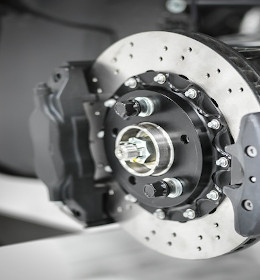 Voir le descriptif
-
Toutes réparations MTAx

Méthode Technique Automobile Expert
La MTA expert est un outil en ligne destiné aux experts en mécanique et en carrosserie, pour effectuer tous types de réparations sur une voiture.
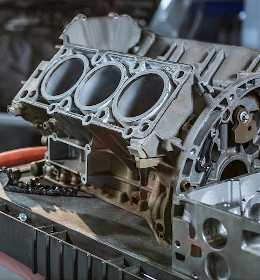 Voir le descriptif